
The Early Years as a Foundation for Whole-Child Health
The earliest stages of life are shaped by a complex interplay of physical nourishment, emotional safety, and neurological development. Feeding, in particular, is not just about calories or growth charts-it is a primary way infants experience regulation, comfort, and connection. When feeding challenges arise, they can ripple outward, affecting bonding, stress levels, and developmental milestones.
Families navigating feeding difficulties often find themselves managing more than logistics. Anxiety, exhaustion, and uncertainty can influence how caregivers interpret their child’s cues or respond to setbacks. Without coordinated support, feeding struggles may evolve into broader developmental or behavioral concerns.
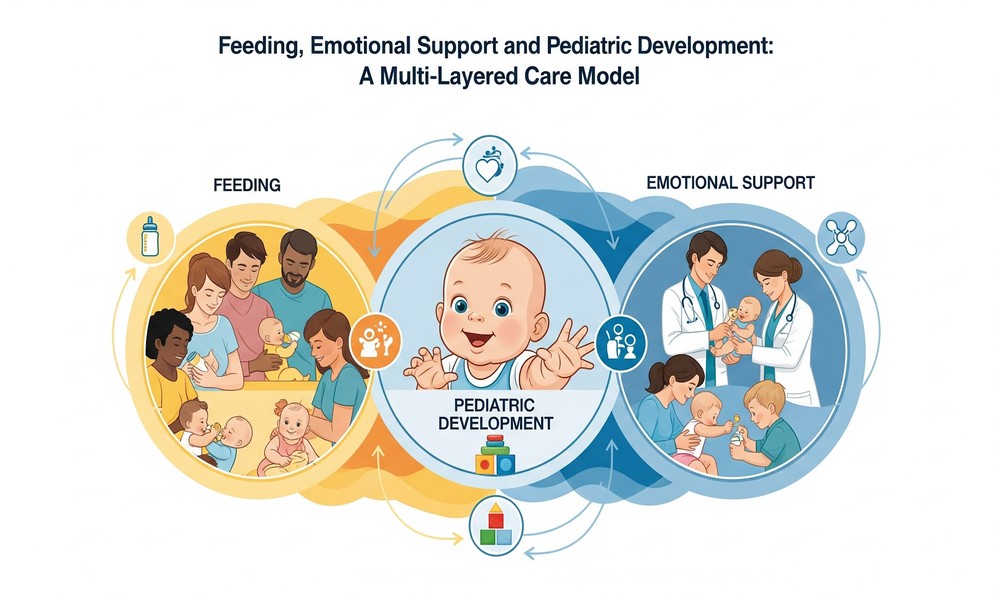
A multi-layered care model recognizes that feeding, emotional regulation, and development are deeply intertwined and best supported through collaboration across disciplines.
Feeding as Both a Physical and Emotional Experience
From the first days of life, feeding shapes how infants understand safety and predictability. The rhythm of feeding-being held, soothed, and responded to-supports nervous system development and emotional regulation. When feeding is calm and responsive, infants learn to trust their environment and their caregivers.
Conversely, feeding difficulties such as poor latch, reflux, or medical complications can introduce stress into these early interactions. Infants may associate feeding with discomfort, while caregivers may feel pressure to “fix” the problem quickly. Over time, this stress can influence feeding behavior, sleep patterns, and emotional cues.
Understanding feeding as both a physical and emotional process allows caregivers and clinicians to address challenges with greater empathy and effectiveness.
Specialized Lactation Support in Complex Feeding Situations
Some infants require specialized feeding support due to prematurity, medical conditions, or NICU stays. In these cases, feeding is often intertwined with medical monitoring, tube feeding transitions, or oral-motor challenges. Families may need guidance that goes beyond standard breastfeeding education.
Services such as Corporate Lactation Services, which provide NICU and infant feeding support through trained lactation consultants, help families navigate these complex scenarios. Lactation consultants can support milk supply, feeding transitions, and caregiver confidence while working alongside medical teams.
When feeding support is tailored to an infant’s medical and developmental needs, families are better equipped to foster both nourishment and emotional connection.
The Emotional Impact of Early Feeding Challenges on Families
Feeding difficulties can significantly affect caregivers’ mental and emotional well-being. Parents may experience guilt, grief, or self-doubt when feeding does not go as expected, particularly if they feel isolated or unsupported. These emotions can shape how caregivers interact with their child during feeding and beyond.
Stress around feeding can also influence family dynamics. Sleep disruption, scheduling pressures, and frequent appointments may lead to burnout. When caregivers are overwhelmed, it becomes harder to notice subtle developmental cues or respond with patience.
Addressing the emotional experience of feeding challenges is just as important as addressing the mechanics of feeding itself.
Early Developmental Pathways and Feeding Intersections
Feeding skills are closely linked to early development. Oral-motor coordination, sensory processing, and self-regulation all play roles in how infants and young children eat. Challenges in these areas may show up as difficulty transitioning to solids, aversion to textures, or prolonged feeding times.
As children grow, feeding-related stress can intersect with communication, attention, or behavioral regulation. Some children may become avoidant, while others may display heightened emotional responses during meals. These patterns can influence social development and family routines.
Recognizing these intersections early allows families to seek support before challenges become entrenched.
Developmental and Behavioral Support as Children Grow
When feeding challenges overlap with developmental differences, targeted therapy can support skill-building and emotional regulation. Behavioral and developmental therapies help children strengthen communication, adaptability, and coping strategies in age-appropriate ways.
Organizations such as Sunshine Advantage, which offer school-based ABA therapy and developmental support, help children build functional skills while respecting individual needs. For some children, therapy supports transitions related to feeding routines, sensory tolerance, or emotional expression.
Integrating developmental support into a child’s care plan ensures that feeding challenges are addressed within a broader context of growth and learning.
Urgent Pediatric Needs and Acute Care Considerations
Even with strong preventive and developmental support, children occasionally require urgent medical care. Acute illnesses, dehydration, infections, or feeding-related complications can arise suddenly, particularly in infants and young children.
Access to timely pediatric care ensures that medical issues are addressed before they escalate. Facilities like Carolina Urgent Care, which provide pediatric urgent care services, help families manage acute concerns while complementing ongoing developmental and feeding support.
When urgent care is integrated into a child’s broader healthcare picture, families receive continuity rather than fragmented responses.
Coordinating Care Across Multiple Support Systems
A multi-layered care model works best when providers communicate and collaborate. Feeding specialists, developmental therapists, pediatric clinicians, and caregivers all bring valuable perspectives to a child’s care. When these perspectives align, families receive clearer guidance and more consistent support.
Coordination helps reduce conflicting advice and ensures that interventions reinforce rather than contradict one another. For example, feeding strategies can align with developmental goals, while medical care supports both safety and progress.
This integrated approach empowers families to feel confident rather than overwhelmed.
Supporting the Whole Family, Not Just the Child
Children thrive when caregivers are supported. Education, reassurance, and practical guidance help parents feel capable and connected. When caregivers understand that challenges are not personal failures but part of a broader developmental journey, stress decreases and resilience grows.
Support systems that acknowledge caregiver well-being create space for healing and growth on both sides of the feeding relationship. Families are more likely to engage consistently with care when they feel respected and understood.
A family-centered model recognizes that nurturing caregivers is essential to nurturing children.
Conclusion: A Layered Approach to Healthy Development
Feeding, emotional support, and pediatric development are inseparable elements of early childhood health. When care models address these layers together-rather than in isolation-children and families experience more sustainable progress and deeper confidence.
A collaborative, multi-disciplinary approach allows feeding challenges to be met with compassion, developmental differences to be supported with skill-building, and medical needs to be addressed promptly. Through coordinated care, early challenges become opportunities for connection, growth, and long-term well-being-for both children and the families who support them.
